


Corgi Joint Health: Why They’re At Risk & What Actually Helps
The complete guide to protecting your Corgi’s hips, spine, and elbows — from the science behind Chondrodysplasia to the supplements that work
Corgis are genetically predisposed to joint problems due to Chondrodysplasia — the same condition that gives them their signature short legs and long body. This makes them one of the top 15 breeds for elbow dysplasia (affecting 1 in 6 Corgis), and significantly increases their risk of hip dysplasia and intervertebral disc disease (IVDD). The best joint supplements for Corgis combine Glucosamine HCl, Chondroitin Sulfate, MSM, Turmeric, Hemp Seed Meal, Hemp Oil, and Hyaluronic Acid — ideally starting before visible symptoms appear, around age 5.
The best joint supplement for Corgis is one that addresses all three of their structural vulnerabilities simultaneously — hip dysplasia, elbow dysplasia, and IVDD. A single-ingredient glucosamine tablet only covers one of those three. A 7-ingredient formula combining Glucosamine HCl, Chondroitin Sulfate, MSM, Turmeric, Hemp Seed Meal, Hemp Oil, and Hyaluronic Acid addresses all three pathways in every daily chew.
If you own a Corgi, you already know their personality is enormous — fearless, energetic, and always ready to herd something. What you may not know is that their unique body structure creates real, measurable joint risks that most Corgi owners don’t discover until something goes wrong.
Corgis are among the most studied breeds for joint and spinal conditions, with peer-reviewed veterinary research confirming glucosamine and chondroitin as the most evidence-backed first-line supplements for managing their joint-specific risks. This guide explains exactly what those risks are, when to act, and what ingredients actually help.
The Corgi Joint Risk — By the Numbers
These aren’t estimates — they’re clinical statistics from orthopedic studies on the breed:
The 3 Joint Conditions Every Corgi Owner Should Know
Corgis face a specific triad of joint conditions that often develop together. Understanding all three helps you catch early warning signs before they compound.
Signs Your Corgi’s Joints Are Struggling
Corgis are stoic by nature — they’re herding dogs bred to work through discomfort. This means joint problems are often more advanced by the time they become visible. Watch specifically for these Corgi-specific warning signs:
- Bunny hopping — both back legs moving together rather than alternately when running, a classic Corgi hip dysplasia sign
- Hunched back or arched spine — a posture change signaling spinal disc pressure, not simple tiredness
- Refusing stairs or ramps — particularly significant since Corgis are normally fearless about terrain
- Morning stiffness — slow to warm up after sleeping, takes longer than usual to move normally
- Shorter walks, stopping sooner — your Corgi’s natural energy and endurance declining noticeably
- Licking or chewing at hip or elbow areas — Corgis self-soothe joint discomfort this way, often a subtle early indicator
- Crying or yelping when picked up — especially under the chest or mid-back, often indicates spinal disc involvement

See how quickly a dog’s mobility can change — and come back — with the right support.

When to Start Joint Support — A Corgi Age Guide
Unlike large breeds where you can wait until senior years, Corgis benefit from earlier intervention due to their structural genetics. Here’s the recommended timeline:
Focus on healthy weight maintenance and avoiding high-impact activities like repetitive jumping. Have your vet assess hips and elbows at your annual checkup. If your Corgi is very active or shows any early stiffness, starting supplements early is reasonable.
This is the most important window for Corgis. Joint degeneration is happening underneath the surface before any visible symptoms emerge. Starting glucosamine, chondroitin, and MSM at age 5 consistently produces better long-term outcomes than waiting for the limp. Don’t wait.
Senior Corgis typically show more visible joint changes. Daily supplementation helps maintain cartilage, lubricate joints, and support a healthy inflammatory response. Combined with orthopedic bedding, ramps for furniture, and regular low-impact exercise, most senior Corgis maintain good mobility well into later years.
What to Look for in a Corgi Joint Supplement
Not all joint supplements address the specific combination of conditions Corgis face. Here’s what each ingredient actually does and why it matters specifically for this breed:
Corgi Serving Size Guide
AdvancedPUP uses weight-based dosing to ensure every dog gets the right concentration of active ingredients — whether you have a 20-pound Pembroke or a 30-pound Cardigan.
| Your Corgi’s Weight | Daily Chews | Cost Per Day | Bottle Lasts |
|---|---|---|---|
| Up to 10 lbs | 2 chews | $0.78 | 45 days |
| 11–30 lbs (Most Pembroke Corgis) | 3 chews | $1.17 | 30 days |
| 31–60 lbs (Larger Cardigans) | 4 chews | $1.56 | 22 days |
| 61+ lbs | 5 chews | $1.94 | 18 days |
Serving sizes per product label. Most Pembroke Welsh Corgis fall in the 11–30 lb range (3 chews daily). Cardigan Welsh Corgis may weigh up to 38 lbs (4 chews daily). Always follow label guidance for your dog’s current weight.
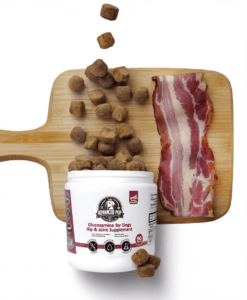
🦴 AdvancedPUP’s 7-in-1 Formula — All 7 Ingredients Corgis Need
Glucosamine HCl + Chondroitin + MSM + Hyaluronic Acid + Turmeric + Hemp Seed Meal + Hemp Oil — every Corgi-critical ingredient in one bacon-flavored daily chew. Works for all dog sizes. 60-Day Empty Bottle Guarantee.
The Weight Factor — Even More Critical for Corgis
Corgis are notoriously food-motivated and prone to weight gain. For most breeds, a few extra pounds is a mild concern. For Corgis, it’s a significant joint health issue.
Because of their disproportionate frame — long spine, short legs, relatively heavy torso — extra body weight multiplies the mechanical load on already-compromised joints. A Corgi that’s just 2–3 pounds overweight experiences significantly more joint stress than a Labrador 5 pounds overweight, simply due to the physics of their build.
Weight management is therefore one of the highest-impact interventions for Corgi joint health — equal to or greater than supplementation alone. The combination of healthy weight and daily joint supplementation starting at age 5 is the approach most veterinary orthopedic specialists recommend.
Exercise Dos and Don’ts for Corgis With Joint Issues
✅ What Helps
- Regular walking on flat surfaces — daily low-impact movement maintains muscle mass and joint lubrication
- Swimming — the best exercise for Corgis with joint issues, zero impact on hips and spine
- Ramps and pet stairs — for furniture and car access, reduces repeated impact of jumping on spinal discs
❌ What to Avoid
- Repetitive jumping from heights — sofa jumping, car jumping — the landing impact directly stresses Corgi spinal discs
- Running on hard surfaces — concrete and pavement amplify joint impact compared to grass or dirt
- Slippery floors without rugs — Corgis compensate by tensing muscles abnormally, increasing joint load
Exactly what I was looking for. Hip and Joint relief supplements in the form of a treat. My dog Hank loves these bacon flavor soft chews. Thank you for sending these so quickly.
Frequently Asked Questions
Related Guides for Corgi Owners
Your Corgi Deserves Breed-Specific Joint Support
AdvancedPUP’s 7-in-1 formula targets all three of the Corgi’s unique joint challenges — hip, elbow, and spine — in one daily bacon chew your dog will actually look forward to.
🛒 Shop AdvancedPUP — Risk-Free Trial 🛡 60-Day Guarantee | 🚚 Free Shipping | 🇺🇸 Made in USA