
My Dog Is Slowing Down on Walks: 5 Real Causes (And What to Do About Each)
A balanced, honest breakdown of why dogs slow down — and how to tell which cause is behind your dog’s change in stride
When a dog starts slowing down on walks, the five most common causes are joint discomfort, cardiovascular or respiratory limitations, overheating, paw problems, or a behavioral/psychological response. In dogs over age 5, joint-related issues are the most frequent cause — and it’s the one that tends to respond fastest to the right support, yet it’s also the one most owners write off as “just getting older.” This guide helps you pinpoint which cause applies to your dog, and which single change makes the biggest difference.
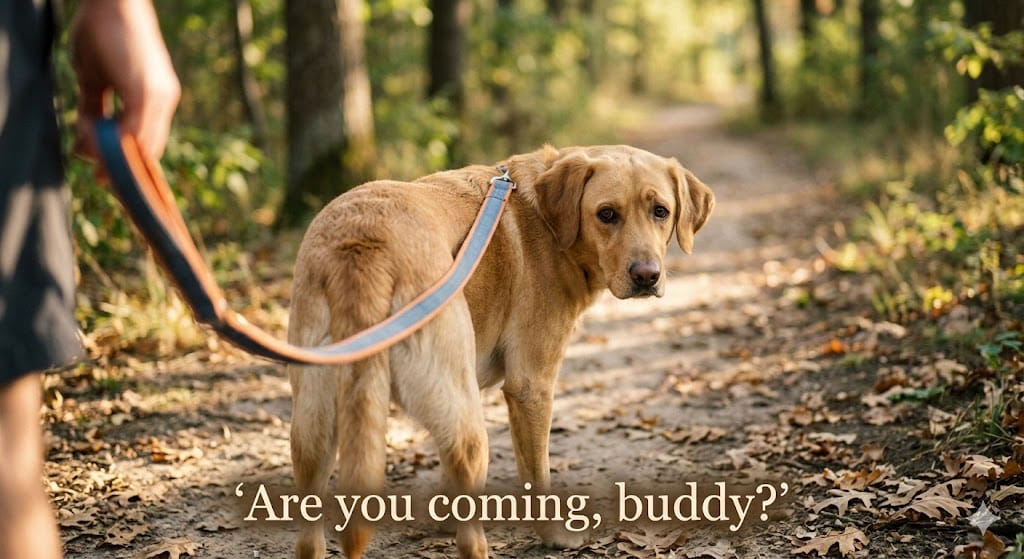
There’s a specific kind of heartache that comes from watching a dog that used to pull you down the street now stop halfway through the block and look up at you asking to go home. If your dog’s walks have been getting shorter, slower, or more reluctant — something has changed. The question is what, and what you should do about it.
The good news is that in most cases, a dog slowing down on walks is not an emergency — but it is a signal worth taking seriously. Peer-reviewed veterinary research confirms that joint-related conditions are among the most common causes of reduced mobility and walk endurance in dogs over age 5, and that early intervention produces measurably better long-term outcomes than waiting.
The 5 Most Common Reasons Dogs Slow Down on Walks
Before jumping to conclusions, it’s worth understanding that walk slowdown has multiple possible causes — some requiring urgent veterinary attention, some manageable at home, and some that resolve on their own. Here’s an honest breakdown of all five.
When joints are struggling, sustained physical activity becomes increasingly uncomfortable. Dogs often start walks normally then slow as joint fluid disperses and tissue stress accumulates. Classic pattern: starts fine, slows after 10–15 minutes, stops and sits mid-route. Often worse the day after a longer walk.
Most common cause in adult & senior dogsHeart and lung conditions reduce oxygen delivery during exercise, causing dogs to tire faster than expected. Key differentiator: your dog pants heavily, seems to struggle for breath, or has a persistent cough alongside the slowdown. More common in older dogs, brachycephalic breeds (Frenchies, Pugs, Bulldogs), and overweight dogs.
See vet promptly if breathing is affectedDogs regulate temperature through panting and paw pads — far less efficient than human sweating. A dog that’s fine in spring but slows significantly in summer heat may simply be overheating rather than experiencing a health issue. Short-nosed breeds, dark-coated dogs, and senior dogs overheat fastest.
Seasonal pattern — check timing of slowdownCracked pads, a broken nail, debris lodged between toes, or surface burns from hot pavement can cause reluctance to walk that looks exactly like joint fatigue or general tiredness. Check your dog’s paws before assuming anything systemic — this is often the quickest fix.
Easy to rule out — check paws firstFear, anxiety, or learned avoidance can cause walk resistance that looks physical. Unfamiliar routes, loud environments, negative past experiences, or simply recognizing they’re near home and wanting to slow down are all documented behavioral causes. Usually identifiable because the pattern is specific — certain locations, times, or triggers.
Pattern-specific — note when and where it happensHow to Tell Which Cause Is Behind Your Dog’s Slowdown
You don’t need a veterinary degree to narrow down the likely cause. These four observations will give you a strong directional answer before you even call the vet:
Observe your dog on the next walk and note:
- When does the slowdown start? — If your dog starts fine and slows after 10–20 minutes, joint-related causes are most likely. If slow from the very beginning, consider paw issues, overheating, or behavioral causes.
- Does your dog stop and sit down mid-walk? — Sitting to rest during a route they’ve always completed is a classic joint fatigue sign, not general tiredness or behavioral reluctance.
- Is there heavy panting or labored breathing? — If yes, cardiovascular or respiratory causes should be evaluated by a vet promptly. If panting is normal for the temperature and activity level, joint causes are more likely.
- Is your dog stiffer the morning after a longer walk? — Post-exercise stiffness that resolves with gentle movement is one of the clearest indicators of joint-related walk reluctance rather than any other cause.
- Is the pattern seasonal or year-round? — Slowdown only in summer heat points to temperature sensitivity. Gradual year-round progression points to joint or cardiovascular causes.
When Joint Discomfort Is the Cause — What’s Actually Happening
If your dog’s pattern matches the joint-related profile — gradual onset, worse after rest, improves slightly with gentle warm-up, sitting mid-walk — it helps to understand what’s actually happening in the body.
Joint-related walk slowdown is caused by cartilage wear combined with reduced synovial fluid production — the biological “lubricant” that allows joints to move smoothly. As cartilage thins, joint surfaces experience more friction during sustained movement. Dogs compensate by slowing down to reduce load on the affected joint, which is why you’ll notice them slowing specifically after initial warm-up rather than being slow from the moment they step outside.
This is a progressive condition — the gap between “mildly slowing down” and “significant mobility loss” is often smaller than pet parents realize. The good news is that this window is also when joint support is most effective. Structural supplements work by supporting cartilage integrity and joint lubrication over time — they’re far more impactful when started before the condition has significantly progressed.
Signs That Confirm It’s Joint-Related
These specific signs — distinct from general tiredness or behavioral causes — point clearly toward joint-related walk slowdown:
- Progressive shortening over weeks or months — walks that used to be 40 minutes are now 15, with no clear incident causing the change
- Stopping and sitting during routes previously completed without pause — mid-walk rest stops are a hallmark of joint fatigue rather than general energy loss
- More stiffness the day after a longer-than-usual walk — post-exercise stiffness that resolves with rest and gentle movement the following day
- Visible muscle loss around hips or thighs — muscle atrophy develops when a dog instinctively reduces movement on an uncomfortable limb
- Reluctance on uneven terrain even when flat routes are managed — grass, gravel, or slopes require more joint stabilization and expose discomfort earlier
- Walk enthusiasm that hasn’t disappeared — just shortened — dogs with joint discomfort often still want to walk but simply can’t go as far as before
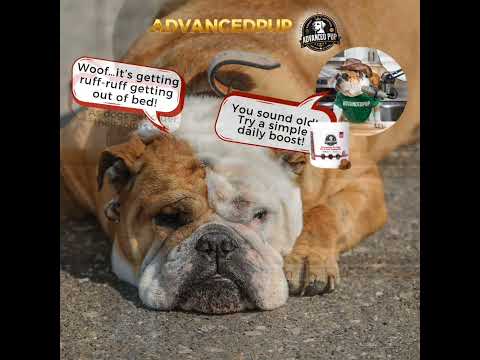
This is exactly what joint-related walk struggle looks like in real life — and what happens after. Watch this real before-and-after transformation. The difference at the end will surprise you.
Which Dogs Are Most at Risk for Joint-Related Slowdown
Any dog can develop joint discomfort over time, but breed and size create meaningfully different risk levels and typical age of onset:
Typical age of onset for joint-related walk slowdown by size:
Breeds with structural risk factors — German Shepherds, Labrador and Golden Retrievers, Corgis, French Bulldogs, Dachshunds, and Rottweilers — frequently show joint-related walk slowdown earlier than these averages. If your dog is one of these breeds, the onset age can shift 2–3 years earlier.
The Biggest Mistake Pet Parents Make
When a dog starts slowing down on walks, the instinct is to reduce walks or stop them entirely to “let them rest.” This feels compassionate — but for joint-related slowdown, it’s counterproductive.
Inactivity causes the muscles that support and stabilize joints to weaken and atrophy. Weakened supporting muscles mean the joint itself carries more of the load — which accelerates the very changes causing the slowdown in the first place. It becomes a self-reinforcing cycle.
The evidence-supported approach is the opposite: maintain frequent, shorter walks rather than fewer, longer ones. Three 10-minute gentle walks are better than one 30-minute walk for a dog with joint-related slowdown. Keep your dog moving — just adjust the intensity and duration rather than eliminating activity.
What Actually Helps When Joints Are the Cause
1. Start a Multi-Ingredient Joint Supplement
Single-ingredient glucosamine supplements are less effective than formulas that combine glucosamine, chondroitin, MSM, and joint lubricants like hyaluronic acid. The ingredients work through different biological mechanisms — cartilage support, breakdown prevention, inflammatory response support, and lubrication — and are significantly more effective together than individually. When choosing a product, look for one made in an NASC (National Animal Supplement Council)-audited facility, which confirms independent quality standards.
2. Switch to Shorter, More Frequent Walks
Three 10–15 minute walks daily instead of one 30–40 minute walk keeps joints moving and muscles active without accumulating the fatigue that causes mid-walk stops. Gentle, consistent movement is far better than rest for joint-related slowdown.
3. Maintain a Healthy Weight
Every additional pound of body weight translates to approximately 4–5 pounds of additional load on hip and knee joints. For a dog already experiencing joint discomfort, even modest weight loss produces meaningful improvement in walk tolerance. Weight management combined with joint supplementation consistently outperforms either approach alone.
4. Adjust Walk Surfaces
Grass and dirt absorb impact significantly better than concrete or pavement. Choosing softer surfaces for walks — parks, trails, grass verges — reduces the per-step joint load and often allows dogs to walk farther before showing slowdown.
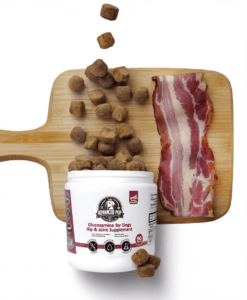
🐾 AdvancedPUP’s 7-in-1 Joint Formula
All 6 key ingredients in one daily bacon-flavored chew — designed for dogs showing early mobility changes like walk shortening. 60-Day Empty Bottle Guarantee.
How Long Before Walks Improve With Joint Support
This is the question every pet parent wants answered — and it deserves a straight answer.
Most dogs show a measurable difference in walk duration and enthusiasm within 3 to 5 weeks of consistent daily supplementation — our week-by-week glucosamine timeline breaks down exactly what’s happening at each stage. The progression typically looks like this:
- Week 1–2: No visible change — supplement is building up in joint tissues. This is normal and expected. Don’t stop.
- Week 2–3: Morning stiffness begins to ease — dog gets moving faster after rest, showing early benefit from MSM and turmeric
- Week 3–5: Walk duration begins extending — dog reaches previous stopping points without sitting, shows more enthusiasm at leash time
- Week 6+: Sustained improvement — many pet parents report dogs asking for walks again, resuming distances they hadn’t managed in months
The critical factor is consistency. Joint supplements work by supporting tissue-level changes over time — not through immediate symptomatic relief. Missing doses in the first month is the most common reason pet parents report “it didn’t work.”
Exactly what I was looking for. Hip and Joint relief supplements in the form of a treat. My dog Hank loves these bacon flavor soft chews. Thank you for sending these so quickly.
When to See a Vet Immediately
Walk slowdown is usually gradual and manageable — but some patterns require urgent veterinary attention. Go to the vet promptly if your dog shows any of these alongside the slowdown:
- Slowdown appeared suddenly (within 24–48 hours) rather than gradually over weeks
- Heavy panting, labored breathing, or blue/grey gums during or after walks
- Visible swelling, heat, or redness around any joint
- Complete refusal to bear weight on one specific leg
- Loss of appetite, significant weight change, or unusual lethargy alongside the walk change
Frequently Asked Questions
Related Guides
Ready to Help Your Dog Go the Distance Again?
AdvancedPUP’s 7-in-1 formula is designed for dogs showing early mobility changes like walk shortening — research-backed ingredients, bacon flavor they love, noticeable results within weeks.
🛒 Shop AdvancedPUP — Risk-Free Trial 🛡 60-Day Guarantee | 🚚 Free Shipping | 🇺🇸 Made in USA