
Why Does My Dog Hesitate on Stairs? 7 Joint Warning Signs You Shouldn’t Ignore
Your dog isn’t being stubborn. That pause at the bottom of the stairs is one of the clearest early signals your dog’s joints are struggling — and most owners miss it.
When a dog hesitates on stairs, it’s usually because climbing requires more joint flexion than flat-ground walking — putting extra pressure on hips, knees, and elbows. But stair hesitation alone is rarely the only signal. There are 7 specific signs that together confirm whether this is a joint issue — and knowing which ones are present tells you how far along the progression is and what to do next.
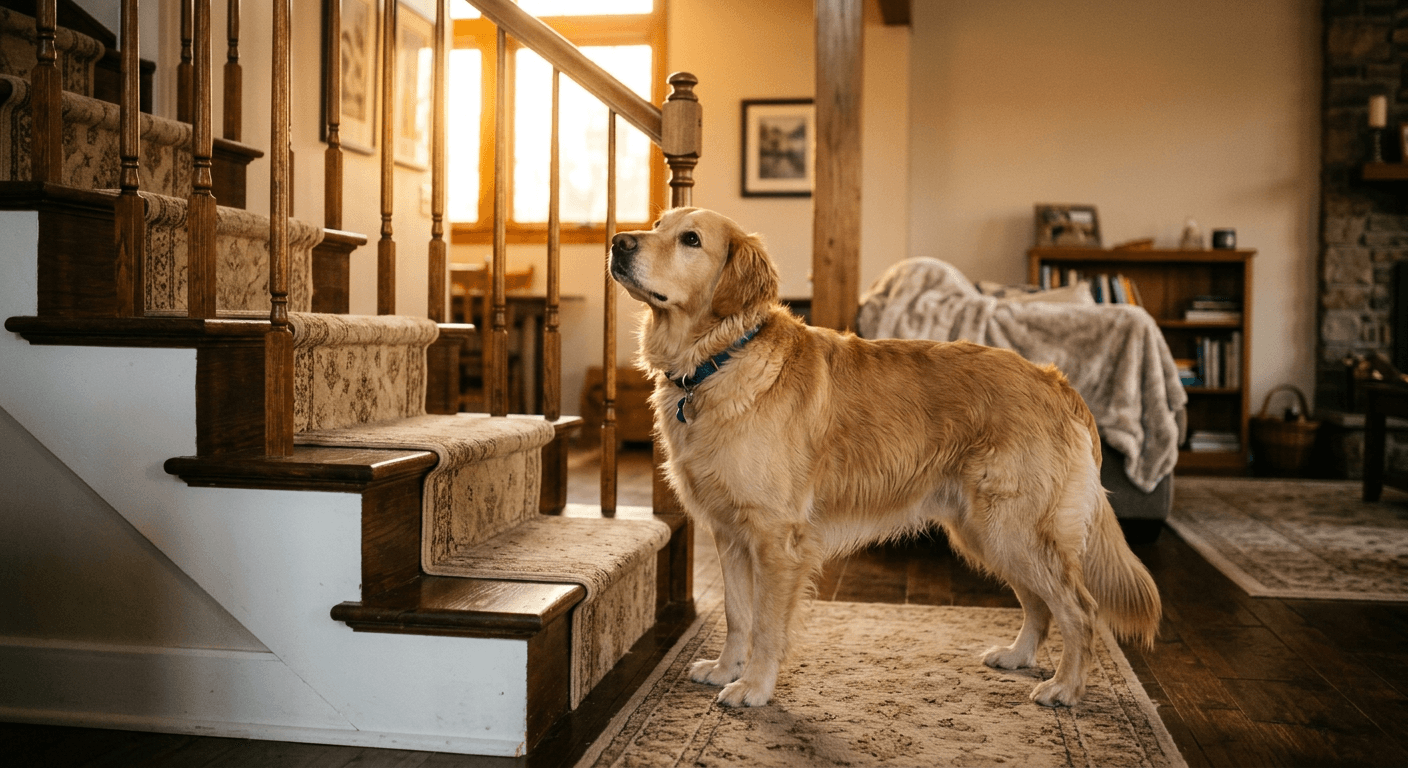
It starts so small you almost miss it. Your dog used to bound up the stairs without a second thought. Now they stand at the bottom, look up, and pause. Maybe they eventually go up — slowly, one step at a time. Maybe they just turn around and find another place to rest.
That moment of hesitation is your dog telling you something important. And the earlier you notice it, the more you can do to help.
This guide covers the 7 most telling signs that stair hesitation is a joint issue, what’s happening inside your dog’s body when they struggle with stairs, and the proactive steps that can help your dog feel like themselves again.
Why Stairs Are the First Place Joint Issues Show Up
Walking on flat ground is relatively easy on your dog’s joints. Stairs are a different story. Climbing requires a much greater range of motion — hips, knees, and elbows all flex more deeply with each step. For a dog with early-stage joint stiffness or discomfort, that added effort is the first thing they try to avoid.
Think of it like a person with a sore knee. They might walk normally through a grocery store, but ask them to climb three flights of stairs and the problem becomes obvious. Your dog’s stair hesitation works the same way.
What makes stairs especially telling is that going up forces the hind legs to push — and the hips bear most of that load. If your dog is reluctant to go up but fine going down, that’s a strong signal the discomfort is in their hind end, hips, or lower back. If they struggle going down, front leg or elbow joints may be involved.

Real dog owners share how their pups went from stair hesitation back to bounding up the stairs.
7 Signs Your Dog’s Stair Hesitation Is a Joint Issue
Stair hesitation alone doesn’t confirm joint discomfort — some dogs are simply nervous about heights or had a past slip. But when stair hesitation shows up alongside these other signals, it points clearly to joint-related mobility changes:
Morning Stiffness
Your dog takes several minutes to “warm up” their legs after sleeping. Joints that are inflamed stiffen during rest — this usually eases as they move around.
Slower Getting Up
Rising from lying down requires the hind legs to push the whole body up. A dog using their front legs to push up first is compensating for weak or uncomfortable hips.
Skipping the Couch or Bed
Dogs that used to jump onto furniture and suddenly stop aren’t being moody — they’re avoiding a movement that causes discomfort in their joints or spine.
Shorter Walks, Lagging Behind
A dog that used to pull on the leash but now falls behind or wants to turn home early is rationing their movement to manage joint discomfort during exercise.
Licking or Chewing at Joints
Dogs instinctively lick an area that bothers them. Repetitive licking at the knees, hips, or wrists — sometimes causing bald spots — can signal localized joint discomfort.
Personality or Mood Changes
A normally sweet dog that becomes irritable, growls when touched near the hips or back, or snaps when picked up may be protecting a painful area — not being aggressive.
Audible Sounds on Movement
Whimpering, groaning, or whining when getting up, climbing stairs, or jumping tells you the movement is uncomfortable enough to vocalize — a sign that warrants attention soon.
Which Dogs Are Most Likely to Hesitate on Stairs?
Any dog can develop joint stiffness, but certain breeds face a significantly higher structural risk:
Large & Giant Breeds
German Shepherds, Labrador Retrievers, Golden Retrievers, Rottweilers, Saint Bernards, and Great Danes carry more body weight across their joints. Their size makes hip dysplasia and arthritis more likely and often more visible in how they navigate stairs and inclines.
Compact & Low-Slung Breeds
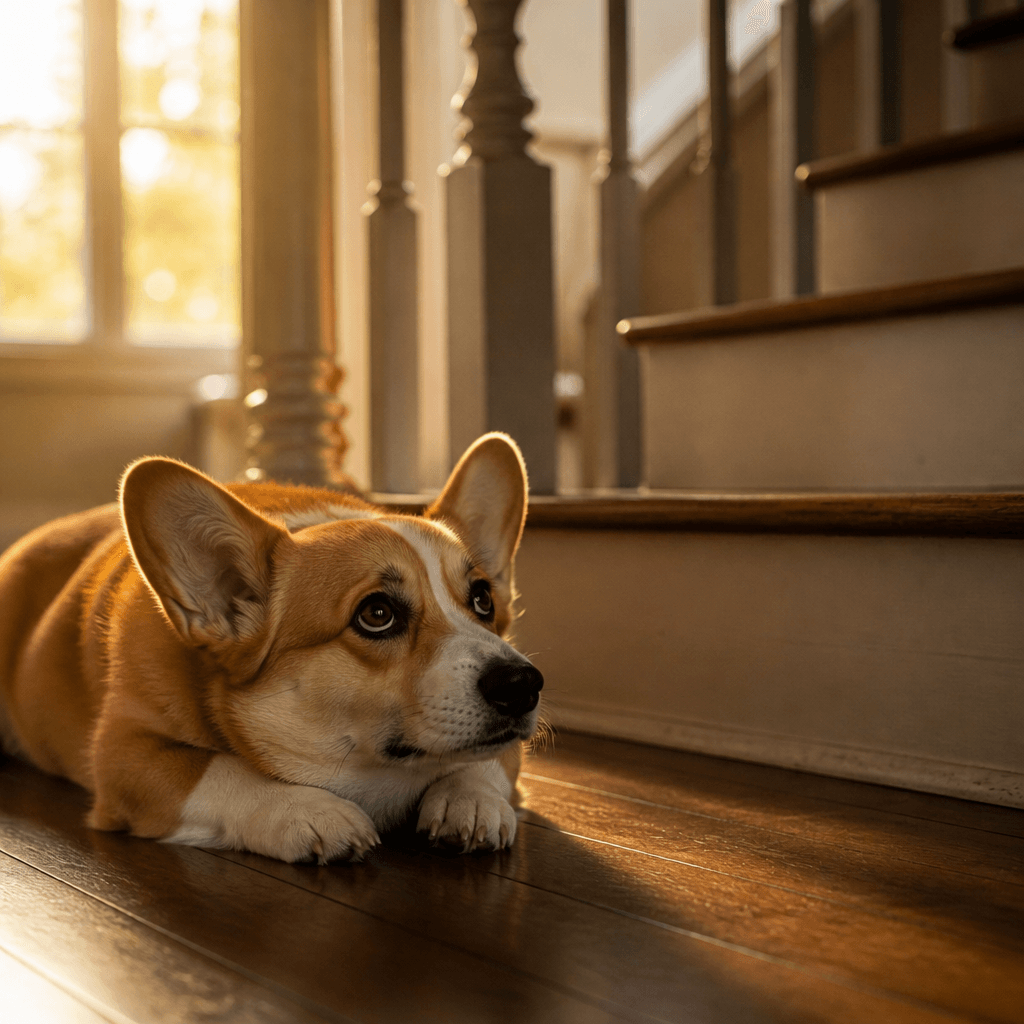
French Bulldogs, Corgis, Dachshunds, Basset Hounds, and Shih Tzus have structural builds that put unusual stress on their spines and elbows. These breeds often show signs of joint stiffness earlier than their size would suggest.
Senior Dogs (All Breeds)
Joint cartilage naturally breaks down over time. By age 7, many dogs have lost meaningful cartilage cushioning in their hips and knees — and stairs become the first daily challenge where that loss becomes obvious.
Younger Dogs in High-Risk Breeds
Hip dysplasia is a genetic condition that can affect dogs as young as 1–2 years old in predisposed breeds. If you have a GSD, Lab, or Rottweiler under 3 years old hesitating on stairs, don’t assume they’re too young for joint issues.
What’s Actually Happening Inside Your Dog’s Joints
Joint cartilage acts as the shock absorber between bones. When it’s healthy and well-lubricated with synovial fluid, your dog can bound up stairs without a second thought. When it starts to break down — due to age, genetics, weight, or overuse — bones make more contact with each other during movement.
Stairs put the hind-leg joints through their maximum range of motion with every step. That bone-on-bone friction is what causes the hesitation, the stiffness, and over time, the reluctance to use stairs at all.
The good news: cartilage breakdown is a gradual process, and supporting joint health early can meaningfully slow that progression and help your dog stay comfortable and mobile longer.
How Joint Stiffness Typically Progresses
Early Stage — Subtle Hesitation
Occasional pause at the bottom of stairs. Slower to get up in the morning. Still active, still playful — owners often dismiss this as the dog “having an off day.”
Middle Stage — Visible Changes
Consistent stair hesitation. Shortened walks. Stops jumping on furniture. May start licking at joints. The pattern becomes undeniable to most owners at this stage.
Advanced Stage — Daily Limitation
Avoids stairs entirely or needs help. Spends more time resting. May vocalize during movement. Vet consultation strongly recommended at this stage.
Most owners start taking action at the middle stage — but the early stage is where proactive support has the greatest long-term impact.
What to Look for in a Joint Supplement
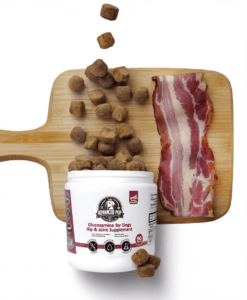
Not all joint supplements are equal. The most effective formulas combine multiple ingredients that work together to support cartilage, joint fluid, and the body’s natural inflammatory response. AdvancedPUP’s 7-ingredient formula includes:
Glucosamine HCl
Supports cartilage repair and helps maintain the cushioning between joints.
Chondroitin Sulfate
Helps retain water in cartilage tissue and supports joint function and flexibility.
Turmeric
Supports a healthy inflammatory response — helping dogs stay comfortable during daily movement.
MSM
A natural sulfur compound that supports connective tissue and joint comfort.
Hemp Seed Meal
A natural botanical ingredient that supports overall wellness alongside joint health.
Cold Pressed Virgin Hemp Oil
Supports the body’s natural inflammatory response and overall joint comfort.
Hyaluronic Acid
Supports synovial fluid — the natural lubricant inside your dog’s joints that allows smooth movement.
What You Can Do Starting Today
- Start a joint supplement early. The best time to support your dog’s joint health is before stiffness becomes a daily limitation. Glucosamine and Chondroitin work best when started proactively.
- Add non-slip surfaces to your stairs. Carpet treads or non-slip strips give your dog the traction and confidence they need to navigate stairs safely.
- Keep walks short and consistent rather than long and infrequent. Regular gentle movement keeps synovial fluid circulating in the joints — forced rest can make stiffness worse.
- Manage your dog’s weight. Every extra pound adds measurable stress to already-struggling joints. Even a 10% weight reduction can meaningfully reduce joint load.
- Talk to your vet. If hesitation is consistent or accompanied by limping, vocalization, or personality changes, a vet exam can confirm whether joint stiffness, hip dysplasia, or another condition is involved.
- Consider a ramp for furniture access. For dogs that have stopped jumping onto the couch or bed, a low-angle ramp lets them stay comfortable without the impact of jumping.
AdvancedPUP Serving Guide by Weight
Weight-based dosing ensures your dog gets the right amount of each active ingredient to support their joints effectively:
| Dog Weight | Daily Serving |
|---|---|
| Up to 10 lbs | 2 chews daily |
| 11–30 lbs | 3 chews daily |
| 31–60 lbs | 4 chews daily |
| 61+ lbs | 5 chews daily |
🐕 German Shepherd Hip Guide
GSDs are the #1 breed for hip dysplasia. See the full breakdown of signs, stages, and support.
Read the Guide⏱ How Long Does Glucosamine Take?
Most owners see changes within 3–4 weeks. Here’s the full timeline of what to expect.
See the Timeline📋 Does My Dog Need a Supplement?
Not sure if your dog’s symptoms warrant a joint supplement? This guide helps you decide.
Take the QuizFrequently Asked Questions
Help Your Dog Take the Stairs Again
7 ingredients. USA made. 60-Day Empty Bottle Guarantee. Free shipping on every order.
Shop AdvancedPUP — Free Shipping