
Why Dogs Slow Down After Age 7: Signs, Causes & What to Do
Most dogs slow down because of one fixable biological cause — not because they’re done. Here’s what’s actually happening and what to do about it.
Dogs slow down after age 7 because of one specific biological process — and there’s a 12–18 month window where what you do next determines the outcome. The signs look like personality changes. Most owners miss them entirely. Here’s how to tell the difference and what actually helps.
“I almost wrote it off as ‘just getting older.’ Six weeks later she was racing me to the door again. I wish I’d started sooner.”
— What owners who started joint support early consistently report.
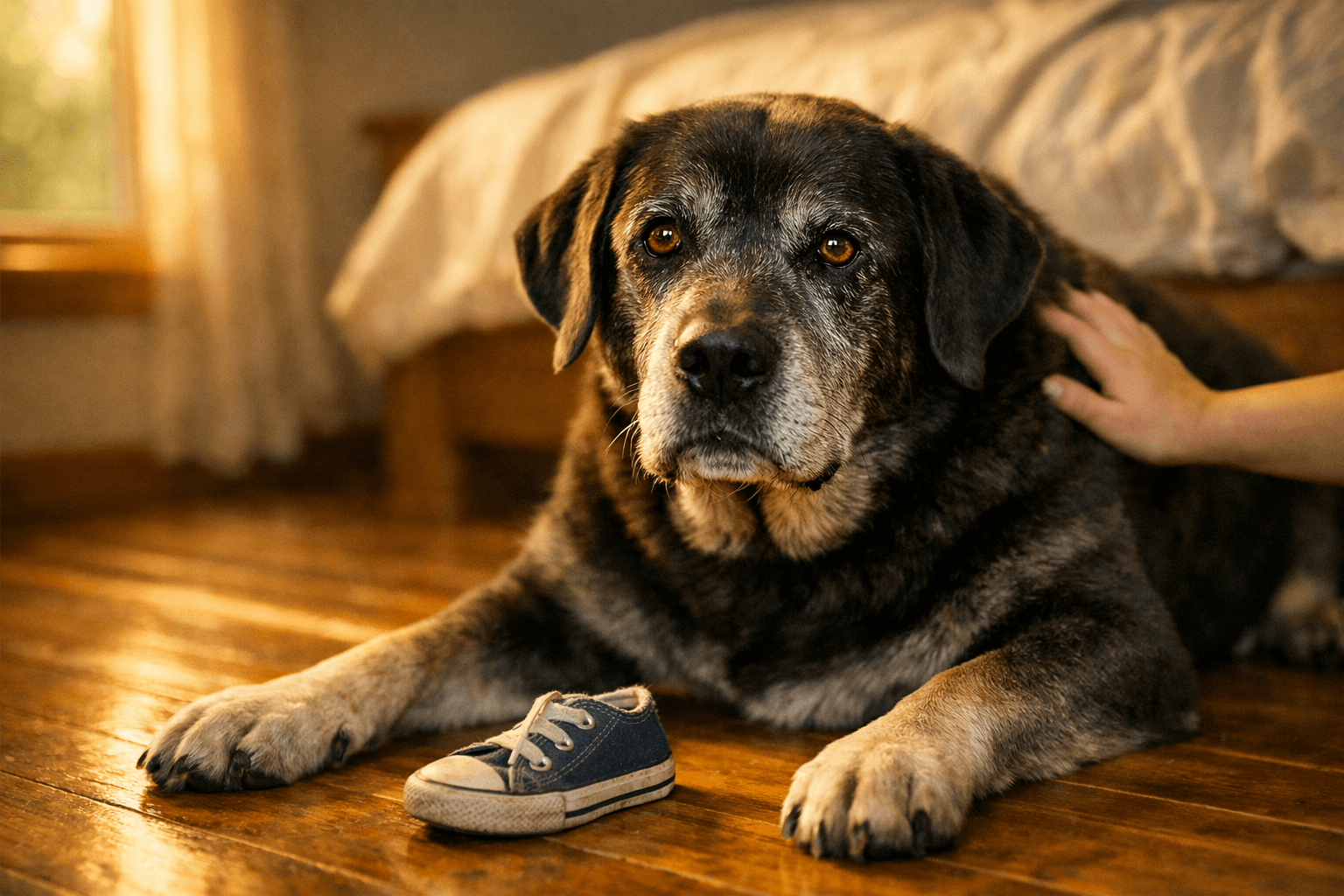
That pause — the one you explained away — is one of the most common things senior dog owners describe. Not a dramatic limp. Not a yelp. Just a hesitation that wasn’t there last year. A dog who used to bound up the stairs now takes them one at a time. A dog who sprinted to the car door now hangs back.
It doesn’t look like a medical symptom. It looks like personality. That’s why most owners miss the 12–18 month window where support makes the biggest difference.
The science is straightforward — but the experience of watching it happen is something worth understanding fully. Here’s what’s actually going on.
If you checked 2 or more — your dog’s joints are asking for support. Keep reading.
What’s Actually Happening Inside Your Dog’s Joints After Age 7
The slowdown you’re watching isn’t random and it isn’t inevitable in the way most people assume. Inside your dog’s joints, a very specific biological process has been underway — often for years before you noticed any outward change.
Joints are cushioned by cartilage — a firm, smooth tissue that absorbs impact and allows bones to move against each other without friction. That cartilage is maintained by a compound called glucosamine, which the body produces naturally. As dogs age, glucosamine production declines. The cartilage that isn’t being maintained begins to thin and wear. The synovial fluid that lubricates the joint decreases in viscosity. Bones that were once well-cushioned begin to experience more friction and pressure during movement.
This is why the changes are gradual. The dog who used to spring up the stairs now pauses at the bottom. The dog who used to race to the door now rises slowly. These aren’t personality changes or signs of the end — they are the physical consequence of joints that need more support than the body is providing on its own.
The Signs to Watch — And When They Usually Appear
Joint changes begin earlier than most owners realize. The visible signs at age 7 or 8 are often the result of breakdown that started years earlier. Here’s what to watch for at each life stage.
Early Signs (Ages 5–7)
These are the changes most commonly missed or dismissed. Slightly slower to rise from rest — especially after long naps or cold mornings. A brief stiffness after intense exercise that fades within an hour. Marginally shorter walks than the previous year. Occasional reluctance to jump onto furniture they used to access freely. These subtle signals are the ideal time to start joint support.
Moderate Signs (Ages 7–9)
Changes become more consistent and harder to ignore. The hesitation before stairs is now every time, not occasionally. Morning stiffness lasts longer before movement loosens things up. Walks are noticeably shorter. Play sessions end earlier. Some dogs begin showing sensitivity when touched near the hips or lower back.
Advanced Signs (Ages 9+)
Mobility changes are visible to anyone watching. Struggling to rise from lying down, reluctance to use stairs at all, a swaying or wobbly rear gait, and significantly reduced activity tolerance. At this stage, weight management becomes critically important — every extra pound adds measurable additional load to joints that are already under stress.
- Slower to rise — especially cold mornings
- Hesitating before stairs or jumping
- Walks shorter than a year ago
- Stiffness after exercise — fades within an hour
- Less enthusiasm for activities they loved
- Sensitivity around hips or lower back
- Quality joint supplement — all 7 key ingredients
- Serving size matched to your dog’s weight
- 6–8 weeks consistent daily use before evaluating
- Daily mobility journal to track real changes
- Orthopedic bedding to reduce rest pressure
- Healthy weight — every pound matters

The Age Question — When Should You Have Started?
The honest answer is earlier than most people do. Joint cartilage does not regenerate once it breaks down. The goal of a quality joint supplement is to support and maintain what’s still healthy — not to reverse what’s already worn. That means the earlier you start, the more there is to protect.
For breeds with known joint predispositions, starting after growth plates close (12–18 months) provides the longest preventive window. Most owners don’t start here — but those who do report the best long-term outcomes.
Subtle breakdown is likely already underway even if nothing is visible. Starting a supplement at this stage can meaningfully slow further cartilage wear through the prime years.
This is where most owners finally start — and it still makes a real difference. You won’t reverse existing wear, but you can support what remains and help maintain comfort and mobility through the senior years.
It is never too late to support joint health. Older dogs respond more slowly but many still show meaningful improvement in comfort and mobility within 6–8 weeks of consistent supplementation.
What to Expect After Starting a Joint Supplement — Week by Week
The most common reason joint supplements “don’t work” is that owners stop too early. Here’s exactly what’s happening inside your dog’s joints at each stage — and when to expect visible changes.
Loading Phase — Nothing Visible Yet
Glucosamine, chondroitin, and MSM are being absorbed and beginning to accumulate in joint tissues. No visible changes at this stage — completely normal and expected. The only goal right now is consistency. Same time every day, every day.
Subtle Early Signals
Some dogs begin showing small changes — slightly faster to rise from rest, a bit more willing on walks, marginally more engaged in the morning. These are easy to miss. Start a simple daily note: rising speed, stair behavior, walk enthusiasm, morning stiffness duration. The written record becomes your evidence base.
🔑 The Critical Window — Most Owners Stop Here By Mistake
Ingredients have now been incorporated into joint tissues to a meaningful degree. This is where most owners either see their first clear confirmation — or make the mistake of stopping because “nothing is happening.” Watch for: consistently faster rising, more enthusiasm at walk time, noticeably reduced morning stiffness, better stair tolerance. If your dog was significantly uncomfortable before starting, allow the full 8 weeks.
Visible Mobility Improvement
For most dogs on a quality supplement at the correct serving size for their weight, this is when owners start reporting clear differences. Compare your daily notes to Week 1 — the contrast is usually striking in writing even when day-to-day changes felt subtle.
Maintenance — Never Stop Here
Joint supplements work cumulatively and continuously. The most common mistake is stopping because your dog “seems better.” The improvement you’re seeing is the supplement working — not the problem resolving on its own. Dogs whose owners stop at this point consistently return to prior levels of discomfort within 2–4 weeks. Stay consistent.
What to Look for in a Senior Dog Joint Supplement
Not all joint supplements are equal. The supplement market is largely unregulated, which means quality, ingredient sourcing, and dosage vary enormously between products. Here are the seven ingredients that matter — and what each one does for a senior dog.
The compound that naturally declines with age — exactly what senior dogs need replaced. Glucosamine supports healthy cartilage maintenance and joint fluid production. Both the HCl and sulfate forms are widely used in dog joint chews; neither has been shown to be definitively superior for dogs.
Works synergistically with glucosamine to support cartilage health and structural joint integrity. Chondroitin helps maintain what cartilage remains and supports a healthy inflammatory response in joint tissues.
Curcumin supports a healthy inflammatory response in joint tissues and contributes to overall immune function — especially valuable for senior dogs.
Methylsulfonylmethane supports joint comfort and overall mobility. It helps maintain normal joint function and supports a healthy inflammatory response — particularly valuable for senior dogs experiencing post-activity stiffness.
A rich plant-based protein source containing a balanced ratio of omega-3 to omega-6 fatty acids. Supports healthy skin and coat while contributing to overall wellbeing and joint tissue health.
Rich in omega-3 and omega-6 fatty acids in natural whole-food form. Supports a healthy inflammatory response throughout the body including in joint tissues.
A key component of synovial fluid — the natural lubricant inside joints that thins with age. Hyaluronic acid supports smooth joint movement and cartilage function.
- Start a quality joint supplement — all 7 key ingredients, correct serving size for your dog’s weight
- Commit to at least 6–8 weeks of consistent daily use before evaluating results
- Keep a daily mobility journal — rising speed, stair willingness, walk duration, morning stiffness
- Maintain a healthy weight — every extra pound adds significant stress to aging joints
- Switch to orthopedic bedding — reduces pressure on joints during the extended rest senior dogs need
- Choose low-impact exercise — swimming, short walks on grass rather than concrete
- Ask your vet to evaluate both hips AND elbows — many dogs have multi-site joint changes
- Look for the NASC Quality Seal on any supplement you choose
- Never stop the supplement because your dog “seems better” — the improvement is the supplement working
- If your dog shows sudden severe mobility changes — always consult your vet first
Give Your Senior Dog More Good Days
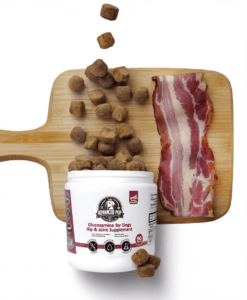
Don’t wait for the limp. The earlier you start supporting your dog’s joints, the more there is to protect — and the better the outcome. AdvancedPUP’s 7-in-1 formula delivers every ingredient that matters in a bacon-flavored chew your dog will actually look forward to.