
Dog Joint Map — Tap a Joint, Pick Your Breed, See What to Watch For
A dog has the same main leg joints you do, just arranged a little differently. Pick your dog’s breed and weight, then tap a glowing joint to see what can go wrong there and which symptoms to watch for.
Hip dysplasia and arthritis are the most common hip problems. They’re best known in large breeds but can affect dogs of any size. Only your vet can diagnose them.
German Shepherd: German Shepherds are one of the breeds best known for hip dysplasia, and symptoms can show up young.
Rottweiler: Hip dysplasia is well known in Rottweilers, a large, heavy breed.
Saint Bernard: Hip dysplasia is well known in giant breeds like Saint Bernards.
French Bulldog: Hip dysplasia is also seen in French Bulldogs.
Dachshund: In Dachshunds, back trouble is much more common than hip trouble — a Dachshund that won’t jump may have a back problem, not a hip one.
Corgi: Hip dysplasia is seen in Corgis.
Shih Tzu: Hip dysplasia is less common in small breeds like Shih Tzus, but it can happen.
- Bunny-hopping gait with both hind legs See vet
- Reluctance to jump, run, or climb stairs See vet
- A bit slow to get up after resting Gradual, with ageSee vet
Book a vet visit — only your vet can tell what’s causing it. In a puppy or young large-breed dog, any of these is a vet visit.
If it came on slowly in an adult or senior dog — no limp, no swelling, still eating and playing as usual — add daily joint support. AdvancedPUP 7-in-1 chews are made to support joint comfort and mobility. Mention it at your next check-up, and book sooner if it gets worse or anything marked “See vet” appears.
A joint supplement is not a treatment for hip dysplasia, arthritis or any other condition.
See the 7-in-1 chews →In this breed, have your vet check any of these first — back trouble can look like a joint problem.
Shoulder trouble in dogs can come from tendon strain, arthritis, or OCD (a cartilage problem seen mostly in young, fast-growing large-breed dogs). Your vet can tell which it is.
- Noticeably shortened front stride See vet
- Front-limb limp after exercise See vet
- Stiffness when rising in the morning Gradual, with ageSee vet
Book a vet visit — only your vet can tell what’s causing it. In a puppy or young large-breed dog, any of these is a vet visit.
If it came on slowly in an adult or senior dog — no limp, no swelling, still eating and playing as usual — add daily joint support. AdvancedPUP 7-in-1 chews are made to support joint comfort and mobility. Mention it at your next check-up, and book sooner if it gets worse or anything marked “See vet” appears.
A joint supplement is not a treatment for hip dysplasia, arthritis or any other condition.
See the 7-in-1 chews →In this breed, have your vet check any of these first — back trouble can look like a joint problem.
Torn cruciate ligaments and kneecaps that slip out of place (luxating patella) are common knee problems. Any limp, sudden or gradual, is a reason to see your vet.
Rottweiler: Torn cruciate ligaments are one of the most common knee problems in Rottweilers, often from gradual wear rather than one accident.
French Bulldog: Kneecaps that slip out of place are a common knee problem in small breeds like French Bulldogs.
Shih Tzu: Kneecaps that slip out of place are a common knee problem in small breeds like Shih Tzus.
- Skipping or hopping over a few steps See vet
- Sitting with one hind leg kicked out See vet
- Sudden or intermittent hind-leg limp See vet
Book a vet visit — only your vet can tell what’s causing it. In a puppy or young large-breed dog, any of these is a vet visit.
Elbow dysplasia is a developmental problem most often first seen in young large-breed dogs, and arthritis can follow in dogs of any size. Both can cause front-end stiffness. Your vet can confirm what’s going on.
German Shepherd: Elbow dysplasia is also well known in German Shepherds.
Rottweiler: Elbow dysplasia is also well known in Rottweilers.
Saint Bernard: Elbow problems are also well known in giant breeds like Saint Bernards.
- Hesitating on stairs and jumps See vet
- Swelling or warmth around the elbow See vet
- Stiff or outward-rotated front paws See vet
- Stiff front legs for the first few steps after rest Gradual, with ageSee vet
Book a vet visit — only your vet can tell what’s causing it. In a puppy or young large-breed dog, any of these is a vet visit.
If it came on slowly in an adult or senior dog — no limp, no swelling, still eating and playing as usual — add daily joint support. AdvancedPUP 7-in-1 chews are made to support joint comfort and mobility. Mention it at your next check-up, and book sooner if it gets worse or anything marked “See vet” appears.
A joint supplement is not a treatment for hip dysplasia, arthritis or any other condition.
See the 7-in-1 chews →In this breed, have your vet check any of these first — back trouble can look like a joint problem.
Sprains, arthritis and OCD can affect the hock (the ankle). Swelling or a sudden limp is a reason to call your vet.
- Slipping a little more on smooth floors than they used to Gradual, with ageSee vet
- Less spring in the step than a year ago Gradual, with ageSee vet
- Swelling around the ankle joint See vet
Book a vet visit — only your vet can tell what’s causing it. In a puppy or young large-breed dog, any of these is a vet visit.
If it came on slowly in an adult or senior dog — no limp, no swelling, still eating and playing as usual — add daily joint support. AdvancedPUP 7-in-1 chews are made to support joint comfort and mobility. Mention it at your next check-up, and book sooner if it gets worse or anything marked “See vet” appears.
A joint supplement is not a treatment for hip dysplasia, arthritis or any other condition.
See the 7-in-1 chews →In this breed, have your vet check any of these first — back trouble can look like a joint problem.
Back trouble is often a disc problem (IVDD), especially in short-legged breeds. Back trouble can look like a leg problem, so let your vet check it. A hunched back, a stiff neck, or back legs that suddenly weaken or stop working need a vet right away. A joint supplement is not a treatment for back or disc problems.
German Shepherd: In German Shepherds, back legs that slowly get weaker or scuff can be a nerve problem rather than a joint one — your vet can tell the difference.
French Bulldog: French Bulldogs are prone to disc problems (IVDD).
Dachshund: Dachshunds are the breed most associated with disc problems (IVDD), because their spinal discs tend to wear out early.
Corgi: Corgis can have disc problems (IVDD), and back legs that slowly get weaker can be a nerve problem rather than a joint one — your vet can tell the difference.
Shih Tzu: Shih Tzus can also have disc problems (IVDD).
- Hesitating on stairs or at the sofa See vet
- Walking stiffly or more slowly than usual See vet
- Back legs slowly getting weaker or wobbly See vet
Book a vet visit — only your vet can tell what’s causing it. In a puppy or young large-breed dog, any of these is a vet visit.
- Back legs weak or wobbly See vet
- Back legs slipping on smooth floors See vet
- Limping after lying down See vet
- Stiff for the first few steps after a nap Gradual, with ageSee vet
- Back legs crossing over or toenails scuffing See vet
Book a vet visit — only your vet can tell what’s causing it.
If it came on slowly in an adult or senior dog — no limp, no swelling, still eating and playing as usual — add daily joint support. AdvancedPUP 7-in-1 chews are made to support joint comfort and mobility. Mention it at your next check-up, and book sooner if it gets worse or anything marked “See vet” appears.
A joint supplement is not a treatment for hip dysplasia, arthritis or any other condition.
See the 7-in-1 chews →- Limping after lying down See vet
- Limping on a front leg See vet
- A bit slower to get up than they used to Gradual, with ageSee vet
- Limping on a back leg See vet
Book a vet visit — only your vet can tell what’s causing it.
If it came on slowly in an adult or senior dog — no limp, no swelling, still eating and playing as usual — add daily joint support. AdvancedPUP 7-in-1 chews are made to support joint comfort and mobility. Mention it at your next check-up, and book sooner if it gets worse or anything marked “See vet” appears.
A joint supplement is not a treatment for hip dysplasia, arthritis or any other condition.
See the 7-in-1 chews →- A bit slower to get up than they used to Gradual, with ageSee vet
- Limping on a back leg See vet
- Limping on a front leg See vet
Book a vet visit — only your vet can tell what’s causing it.
If it came on slowly in an adult or senior dog — no limp, no swelling, still eating and playing as usual — add daily joint support. AdvancedPUP 7-in-1 chews are made to support joint comfort and mobility. Mention it at your next check-up, and book sooner if it gets worse or anything marked “See vet” appears.
A joint supplement is not a treatment for hip dysplasia, arthritis or any other condition.
See the 7-in-1 chews →- Struggling to jump on or off furniture See vet
- Back legs weak or wobbly See vet
- Skipping or hopping for a few steps, then walking normally See vet
- Limping on one back leg, on and off See vet
Book a vet visit — only your vet can tell what’s causing it.
- Struggling to jump on or off furniture See vet
- Hesitating on stairs See vet
- Walking stiffly See vet
- Back legs wobbly or slipping See vet
- Limping on and off See vet
Book a vet visit — only your vet can tell what’s causing it.
- Back legs slipping on smooth floors See vet
- Limping after sleeping See vet
- Not wanting to go up or down stairs See vet
- Back legs seem weak See vet
- Back legs crossing over or toenails scuffing See vet
Book a vet visit — only your vet can tell what’s causing it.
- Limping on and off, or skipping a step See vet
- Back legs wobbly See vet
- Not wanting to jump See vet
- Holding up a back leg for a few steps See vet
Book a vet visit — only your vet can tell what’s causing it.
- Stiff after naps or in the morning Gradual, with ageSee vet
- A bit slower to get up than they used to Gradual, with ageSee vet
- Not jumping on the bed or into the car See vet
- Slipping a little more on smooth floors than they used to Gradual, with ageSee vet
- Lagging behind or stopping to sit on walks See vet
Book a vet visit — only your vet can tell what’s causing it.
If it came on slowly in an adult or senior dog — no limp, no swelling, still eating and playing as usual — add daily joint support. AdvancedPUP 7-in-1 chews are made to support joint comfort and mobility. Mention it at your next check-up, and book sooner if it gets worse or anything marked “See vet” appears.
A joint supplement is not a treatment for hip dysplasia, arthritis or any other condition.
See the 7-in-1 chews →Seven ingredients in every 2-chew serving to support joint comfort and mobility as part of your dog’s daily routine. It isn’t a treatment for any condition.
- Glucosamine300 mg · joint blend
- Chondroitin200 mg · joint blend
- MSM50 mg · joint blend
- Turmeric70 mg
- Hemp Seed Meal50 mg
- Cold Pressed Virgin Hemp Oil50 mg
- Hyaluronic Acid2 mg
“My senior dog was slowing down now she is noticeably improving each week”
“Works and she thinks it’s a treat”
“Great Ingredients – I love that this is made in the USA”
This map is a guide, not a diagnosis. Anything sudden — a limp, swelling, or back legs that suddenly weaken — is a vet visit first.
Dog Joint Diagram: The Names of Your Dog’s Leg Joints
If you’ve ever wondered whether dogs have knees, or which joint the “hock” is, here’s the quick version. The map above covers the hips, shoulders, knees, elbows, hocks and the back; the table also includes the carpus (wrist).
Do Dogs Have Knees?
Yes — on the back legs. A dog’s knee is the stifle, at the bottom of the thigh. On the front leg, the joint people often call a knee is actually the wrist (carpus).
| Joint | Also called | Where to find it |
|---|---|---|
| Shoulder | — | Front of the chest, where the upper front leg meets the shoulder blade |
| Elbow | — | Back of the front leg, about level with the bottom of the chest |
| Carpus | Wrist | Front leg, just above the paw |
| Hip | — | Where the back leg meets the pelvis |
| Stifle | Knee | At the bottom of the thigh, near the belly, facing forward |
| Hock | Tarsus, ankle | Back leg, the backward-pointing joint above the paw |
| Spine | Back | Many small joints between the vertebrae, cushioned by discs |
Joint-by-Joint Guide: What Can Go Wrong and What to Watch For
Hips
Where the back leg meets the pelvis — a ball-and-socket joint.
Hip dysplasia and arthritis are the most common hip problems. They’re best known in large breeds but can affect dogs of any size. Only your vet can diagnose them.
- Bunny-hopping gait with both hind legs
- Reluctance to jump, run, or climb stairs
- A bit slow to get up after resting
Shoulders
Front of the chest, where the upper front leg meets the shoulder blade.
Shoulder trouble in dogs can come from tendon strain, arthritis, or OCD (a cartilage problem seen mostly in young, fast-growing large-breed dogs). Your vet can tell which it is.
- Noticeably shortened front stride
- Front-limb limp after exercise
- Stiffness when rising in the morning
Knees / stifles
At the bottom of the thigh, near the belly, facing forward. In dogs it’s called the stifle.
Torn cruciate ligaments and kneecaps that slip out of place (luxating patella) are common knee problems. Any limp, sudden or gradual, is a reason to see your vet.
- Skipping or hopping over a few steps
- Sitting with one hind leg kicked out
- Sudden or intermittent hind-leg limp
Elbows
At the back of the front leg, roughly level with the bottom of the chest.
Elbow dysplasia is a developmental problem most often first seen in young large-breed dogs, and arthritis can follow in dogs of any size. Both can cause front-end stiffness. Your vet can confirm what’s going on.
- Hesitating on stairs and jumps
- Swelling or warmth around the elbow
- Stiff or outward-rotated front paws
- Stiff front legs for the first few steps after rest
Hocks (ankles)
The backward-pointing joint above the back paw — the dog’s ankle (tarsus).
Sprains, arthritis and OCD can affect the hock (the ankle). Swelling or a sudden limp is a reason to call your vet.
- Slipping a little more on smooth floors than they used to
- Less spring in the step than a year ago
- Swelling around the ankle joint
Back / spine
The spine: many small joints between the vertebrae, cushioned by discs.
Back trouble is often a disc problem (IVDD), especially in short-legged breeds. Back trouble can look like a leg problem, so let your vet check it. A hunched back, a stiff neck, or back legs that suddenly weaken or stop working need a vet right away. A joint supplement is not a treatment for back or disc problems.
- Hesitating on stairs or at the sofa
- Walking stiffly or more slowly than usual
- Back legs slowly getting weaker or wobbly
🩺 See Your Vet First If… (tap to open)
- There’s a limp, swelling, or your dog cries out when touched or picked up
- Your dog won’t put weight on a leg
- Anything changed suddenly — especially back legs that are weak, wobbly or dragging
- Your dog is a puppy or young dog showing any of the symptoms above
Dog Breeds Prone to Joint Problems
Some breeds are known for particular joints. Here’s where to look first — and a full guide for each breed.
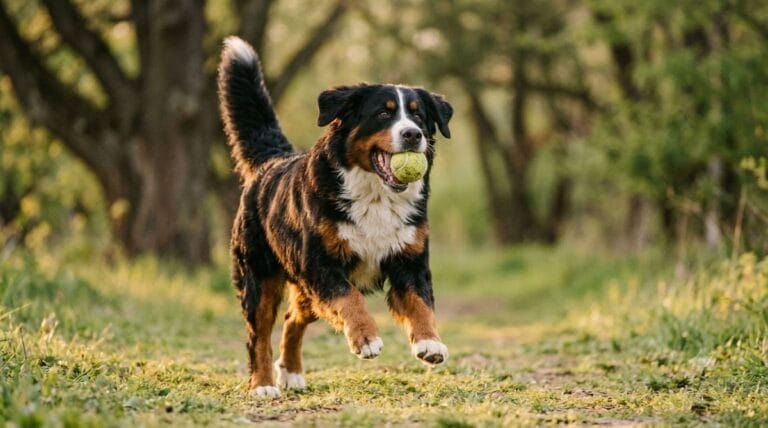

AdvancedPUP’s 7-in-1 chews support joint comfort and mobility as part of your dog’s daily routine — 7 ingredients, every mg on the label. It isn’t a treatment for any condition.
See the 7-in-1 Chews →Dog Joint Map FAQ
What are the names of a dog’s leg joints?
On the front leg: the shoulder, the elbow and the carpus (wrist). On the back leg: the hip, the stifle (knee) and the hock (ankle). Below those are the small joints of the paws and toes.
What is the hock joint on a dog?
The hock is the joint on the back leg just above the paw that points backward. It’s the dog’s equivalent of our ankle — the bony point at the back is the heel.
Do dogs have knees?
Yes. A dog’s knee is called the stifle. It sits at the bottom of the thigh, near the belly, and faces forward. The backward-pointing joint lower down is the hock, which is the ankle. On the front leg, the joint people often call a knee is actually the wrist (carpus).
Which dog breeds are prone to joint problems?
Large and giant breeds such as German Shepherds, Labradors, Rottweilers and Saint Bernards are well known for hip and elbow problems. Short-legged breeds such as Dachshunds, Corgis and French Bulldogs are prone to back (disc) problems, and small breeds such as Shih Tzus are more often affected at the knee — and Shih Tzus can also have disc problems. Pick your breed in the map above — or choose Mixed / Other and your dog’s weight.
Is this joint map a diagnosis?
No. It’s a guide to help you notice changes and know what to ask about. Only your vet can tell what’s causing a symptom.